
Why home loan applications get declined, and what to do next
By Lena Delgado · Updated 2026-07-27
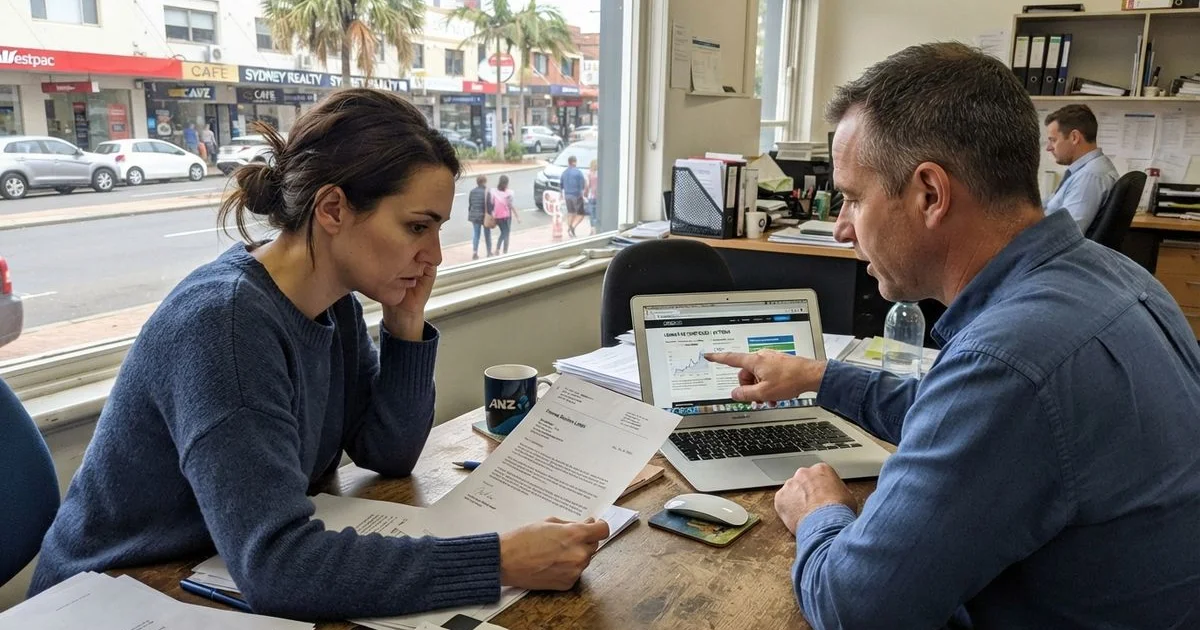
Getting a home loan application declined after weeks of paperwork is genuinely stressful, and it happens more often than people expect, even to buyers who assumed they were in a strong position. Understanding the common reasons behind a decline makes it easier to fix the actual problem rather than just trying another lender and hoping for a different result.
The most common reasons
- Borrowing capacity doesn’t stack up against the lender’s own assessment. An initial estimate, especially a rough one from a calculator or an early conversation, can overstate what a specific lender will actually approve once their full serviceability buffers and living expense benchmarks are applied.
- Credit history issues, including missed payments, defaults, or too many recent credit applications, which can look like financial stress to a lender even if your situation is genuinely fine now.
- Insufficient or inconsistent income documentation, particularly for self-employed applicants whose income varies year to year.
- Existing debt levels, including credit cards and buy-now-pay-later balances, which reduce how much a lender will lend regardless of your income.
- Property-specific issues, like a lender’s valuation coming in lower than the purchase price, or the property type falling outside that lender’s lending policy.
Why an early estimate can be misleading
A rough borrowing power estimate, like the kind you might get from an online calculator, is a useful starting point, not a guarantee. It typically doesn’t account for a specific lender’s serviceability buffer, how they treat particular income types, or your full list of existing debts and expenses. This gap between an early estimate and a lender’s actual assessment is one of the more common, and more avoidable, causes of disappointment later in the process.
Where this tends to bite hardest is when a buyer has already made an offer, or bid at auction, based on the early estimate rather than a lender’s confirmed pre-approval. That’s part of why getting a proper pre-approval before you start seriously house hunting matters more than it might seem when you’re keen to get moving.

What to do after a decline
| Step | Why it helps |
|---|---|
| Ask the lender for the reason | Gives you something specific to address, rather than guessing |
| Review your credit file | Confirms whether an error or an old issue is affecting your score |
| Address the specific issue before reapplying | Avoids repeating the same outcome with a different lender |
| Talk to a broker before applying elsewhere | A broker can identify a lender whose policy actually fits your situation |
| Avoid multiple rapid applications | Several declines close together can look worse to lenders than one |
Fixable issues vs longer-term ones
Some causes of a decline can be sorted out quickly, like providing missing documentation or clarifying an error on your credit file. Others, like a history of missed payments or debt levels that genuinely need paying down, take real time to improve. Being honest with yourself about which category your situation falls into helps you avoid the frustration of reapplying too soon and being declined again for the same underlying reason.
A broker can usually give you a realistic read on which category applies, along with a rough sense of what “sorted out” actually looks like in practical terms, whether that’s three months of clean repayment history or simply a corrected document on file.
Turning it into useful information
A decline from one lender doesn’t mean every lender will say no. Different lenders assess income, debt, and credit history differently, which is exactly why comparing across a panel matters. This is the same comparison advantage covered in our guide on going through a broker versus applying with just one bank: a single-lender application leaves you fully exposed to that one lender’s policy quirks. A broker involved from the start can often see this coming and steer you toward a lender whose policy actually fits your situation, rather than you finding out the hard way after weeks of paperwork. If you’ve been declined, it’s worth a conversation with a mortgage broker before trying again on your own. Our methodology explains how we weigh honest, upfront assessment when scoring the brokers listed here, and our home page is a good place to start comparing.
FAQ
- Does a declined application hurt my chances with other lenders?
- It can leave a mark on your credit file, and repeated applications in a short window can look concerning to other lenders. This is one reason it's worth understanding why you were declined and addressing it before applying again, rather than immediately trying somewhere else.
- Can I ask the lender why I was declined?
- Yes, and you should. Lenders aren't always required to give a detailed reason, but many will give a general explanation, and a broker involved in the application can often get more useful detail than you would applying alone.
- Is a decline the same as being permanently unable to get a loan?
- No. It usually means that particular lender, at that point in time, with that specific application, didn't meet their criteria. A different lender, or the same lender after you've addressed the issue, may well approve you.
- How long should I wait before applying again?
- It depends on the reason for the decline. If it's something fixable quickly, like a documentation gap, you might be ready sooner. If it's about serviceability or credit history, it often takes months of demonstrated improvement before reapplying makes sense.