
First home buyer costs in NSW: stamp duty, LMI and government schemes
By Lena Delgado · Updated 2026-07-13
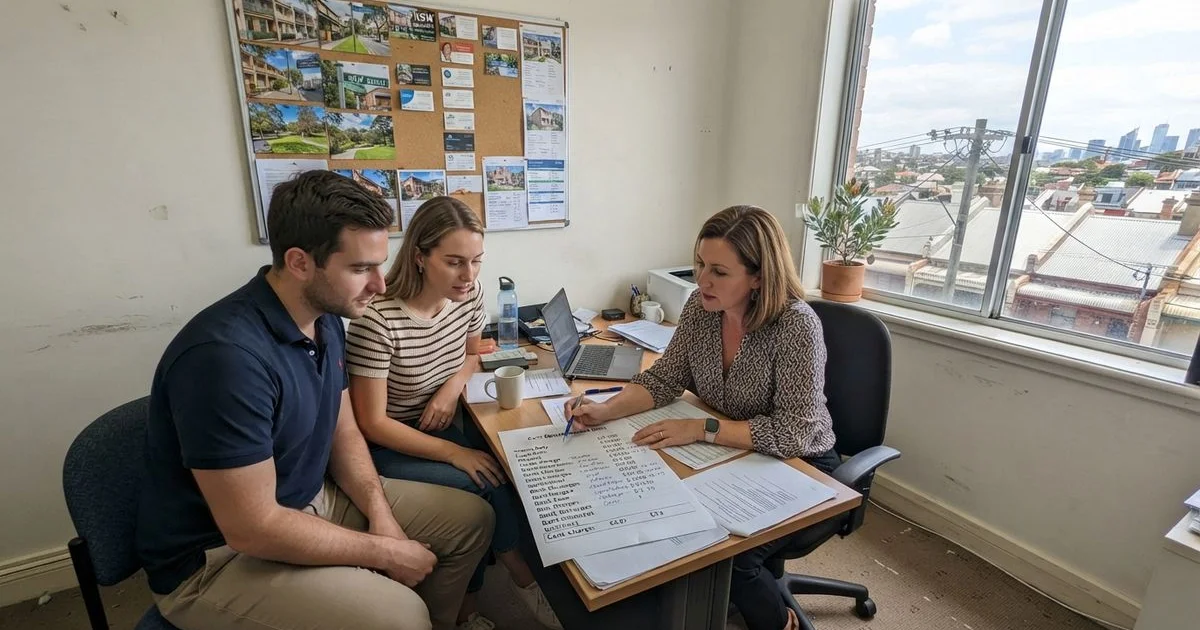
The deposit gets most of the attention when you start planning to buy your first home, but it’s rarely the only number that matters. Stamp duty, lenders mortgage insurance, and a handful of smaller fees all sit between your savings and settlement day, and several government schemes exist specifically to soften that load for first home buyers. Here’s how the pieces fit together.
Stamp duty: the concession that can be worth a lot
Stamp duty (also called transfer duty) is a state government tax charged on the purchase, calculated on the property’s value. In NSW and most other states, eligible first home buyers get either a full exemption below a set purchase price, or a partial concession up to a higher threshold. Because thresholds and rates are set by the state and reviewed periodically, the exact figures aren’t something to guess at: your broker or a conveyancer can confirm the current concession against the specific property you’re looking at.
Lenders mortgage insurance, and how to avoid it
If your deposit is below 20% of the purchase price, most lenders require lenders mortgage insurance (LMI), a one-off premium that protects the lender, not you, if you default. It can add a meaningful amount to your upfront costs or get added to your loan balance. The First Home Guarantee scheme is the main way around this: it lets eligible buyers purchase with as little as a 5% deposit while the government guarantees the rest, removing the need for LMI altogether. Spots in the scheme are capped each financial year, so timing matters if you’re relying on it.

The full cost picture, not just the deposit
| Cost | Typical range | Can it be reduced? |
|---|---|---|
| Deposit | Usually 5-20% of purchase price | Lower with First Home Guarantee (subject to eligibility) |
| Stamp duty | Varies by state and price, can be $0 for eligible first home buyers | Yes, via first home buyer exemptions or concessions |
| Lenders mortgage insurance | Applies if deposit is below 20% | Avoidable via First Home Guarantee if eligible |
| Conveyancing/legal fees | A modest fixed fee, varies by provider | Compare quotes, but don’t cut corners here |
| Building and pest inspection | A modest fixed fee per inspection | Worth paying even when it feels optional |
| Loan application and valuation fees | Vary by lender, sometimes waived | Ask your broker which lenders on their panel waive these |
Stacking the schemes that actually apply to you
Most first home buyers can only combine a subset of the available concessions and schemes, since eligibility rules interact (income caps, property price caps, and whether you’ve owned property before all matter). A broker who works with first home buyers regularly should be able to map out which combination you actually qualify for, rather than you working through each scheme’s rules separately. It’s also worth checking whether the First Home Super Saver arrangement, which lets you use voluntary superannuation contributions toward a deposit, fits your timeline, since it needs to be set up well before you’re ready to buy.
Building a realistic budget, not just a deposit target
It helps to think in two separate buckets: money you need before settlement (deposit, stamp duty if it applies, and the smaller fees above), and money you need after settlement (moving costs, any immediate repairs or furnishing, and a buffer for the first few months of higher-than-usual spending). First home buyers who budget only for the first bucket sometimes find themselves stretched thin in the weeks right after moving in, which is avoidable with a bit of planning upfront. A broker can walk through both buckets with you, not just the loan itself, so the whole picture is accounted for before you sign a contract.
Government scheme rules and thresholds change, so treat the specifics above as a starting point for a conversation, not the final word. A broker working with the first home buyer segment day to day will have the current numbers and can tell you quickly whether you’re likely to qualify. Our methodology explains how we assess brokers on this kind of scheme knowledge, and our home page is a good starting point if you’re ready to compare a few.
FAQ
- Do all first home buyers pay stamp duty?
- Not always. Most states, including NSW, offer a concession or full exemption for eligible first home buyers under a certain purchase price, with a partial concession up to a higher threshold. The exact thresholds change over time, so confirm the current ones with your broker or a conveyancer before you budget.
- Can I avoid lenders mortgage insurance with a smaller deposit?
- Sometimes. The First Home Guarantee scheme lets eligible buyers purchase with as little as 5% deposit without paying LMI, since the government guarantees part of the loan instead. Places in the scheme are limited each year, so check current availability early.
- What other costs catch first home buyers off guard?
- Conveyancing or legal fees, building and pest inspections, loan application or valuation fees, and moving costs are the ones people most often forget to budget for. None of these are huge individually, but together they can add a few thousand dollars beyond the deposit and stamp duty.
- Should I use my full deposit or keep some cash in reserve?
- Most brokers recommend keeping a buffer beyond your deposit and settlement costs for the first few months in the new property, since moving in usually brings some unplanned expenses. A broker can help you see how a smaller upfront buffer affects your loan structure.