
Equipment and asset finance for tradies and small business owners
By Lena Delgado · Updated 2026-07-28
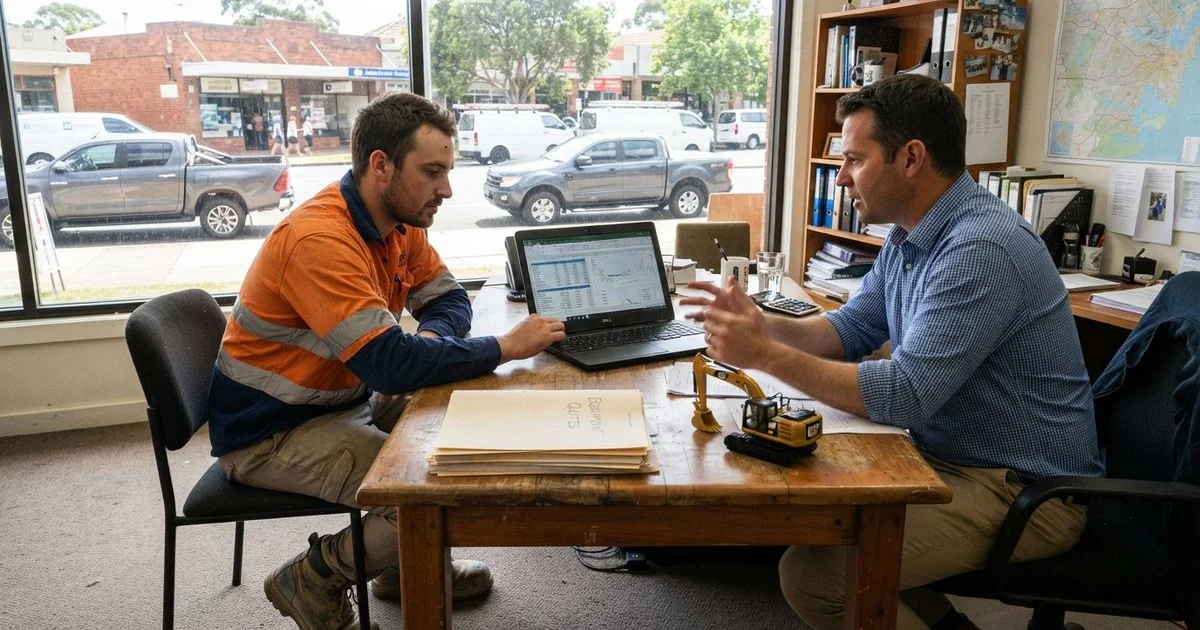
A tradie who needs a new ute, or a small business that needs to replace ageing machinery, usually doesn’t want to tie up cash reserves to do it outright. Equipment and asset finance exists for exactly this: spreading the cost of a specific business asset over time, often using the asset itself as security for the loan.
How it differs from a standard business loan
A general business loan is typically assessed on your overall financials and can be used flexibly across the business. Equipment finance is tied to a specific asset, usually with that asset (a vehicle, machinery, or trade tools) acting as security. Because the lender has a concrete asset to fall back on if something goes wrong, approval can sometimes be faster and more accessible than a general unsecured business loan, even for businesses without a long trading history.
What lenders typically want to see
- A clear description of the asset being financed, including its expected resale value.
- Recent business financials or, for newer businesses, a realistic cash flow picture and business plan.
- Some evidence of ongoing or expected work that supports the repayments.
- Your own credit history, since most equipment finance still involves a personal guarantee from the business owner.
That’s a different kind of guarantee to the family arrangements used in some home loans, but the same core idea: someone stands behind the debt if the primary borrower can’t repay it. Our guide to guarantor and low deposit home loans covers how that works on the home loan side.
None of this needs to be perfect. Newer businesses and sole traders do get approved regularly, particularly when the asset itself has strong resale value that reduces the lender’s risk.
Timing it around your work, not just your cash flow
Beyond the loan structure itself, timing matters. Financing a new vehicle or machine right before a busy season can strain cash flow just when you need it flowing the other way, while financing during a quieter stretch gives you room to absorb the first few repayments before work picks back up. It’s worth mapping the finance timeline against your typical business cycle rather than only against when the old equipment finally gives out.
Comparing the common structures
| Structure | How it works | Best suited to |
|---|---|---|
| Chattel mortgage | You own the asset from day one, the lender holds a mortgage over it as security | Businesses that want to own the asset outright and may claim GST upfront |
| Finance lease | The lender owns the asset, you lease and use it, often with an option to buy at the end | Businesses that prefer lower ongoing commitment or plan to upgrade the asset regularly |
| Hire purchase | You hire the asset with an agreement to purchase it once payments are complete | Businesses wanting ownership at the end without the full upfront structure of a chattel mortgage |
Balloon payments and how they change the numbers
Many of these structures allow a balloon payment, a larger lump sum due at the end of the term, which lowers your regular repayments along the way. It can make sense if you plan to refinance, sell, or upgrade the asset around that time, but it’s worth planning for that final payment specifically, rather than assuming it will simply be manageable when it arrives. A broker can model the loan with and without a balloon so you can see the actual trade-off in regular repayments versus that final amount.
None of these decisions need to be made alone. Talking through the structure with both your broker and your accountant before signing means the finance actually fits how the business runs, not just how quickly it can be approved.
Getting the right fit, not just the fastest approval
The cheapest headline rate isn’t always the best fit once you factor in how the structure affects your tax position, your cash flow, and what happens if you want to upgrade the asset before the term ends. A broker who works in commercial finance regularly, rather than one who mostly handles home loans, will usually know which lenders are comfortable with your industry and asset type, and can explain the practical trade-offs between the structures above alongside your accountant’s advice. Our methodology explains how we assess brokers on commercial and asset finance specifically, and our home page is a good place to start comparing.
FAQ
- What counts as an eligible asset for equipment finance?
- Most physical business equipment: vehicles, tools, machinery, trailers, and trade-specific gear all typically qualify. Some lenders also finance software and technology assets, though policies vary, so it's worth confirming with a broker before assuming.
- Do I need a long trading history to qualify?
- Not always. Some lenders on a broker's panel are comfortable with newer businesses or sole traders, especially if the asset itself has strong resale value and can act as security. A limited trading history usually means fewer lender options, not zero.
- Is equipment finance the same as a personal loan for a work vehicle?
- No. Equipment finance is structured specifically around the business asset, often with the asset itself as security, and can come with different tax treatment than a personal loan. It's worth discussing with your accountant alongside your broker.
- Can I finance equipment before I have a signed contract with a client?
- Yes, many tradies finance a vehicle or tools before securing specific work, based on their broader business plan and cash flow. Lenders will still assess your overall serviceability, not just the one upcoming job.